
Octahedral (Industry Compatible) Viewport Display Mode for Armatures
The Problem: There is a fundamental difference in how Blender and industry-standard game engines handle skeletons. Blender uses a bone-based structure consisting of a Head, Body, and Tail. In contrast, game engines (Unreal, Unity, Godot) use a point-based or joint-based node structure, relying purely on transforms (which align with the Blender bone's Head).
Because of this visual disconnect, setting up skeletons for game engines inside Blender can be confusing. It is difficult to visualize exactly how the skeleton will translate to the engine, and exporting often results in duplicate bones or the forced addition of "leaf bones" to account for Blender's bone tails. This slows down the rigging pipeline and requires tedious, time-consuming adjustments to get skeletons set up correctly outside of Blender.
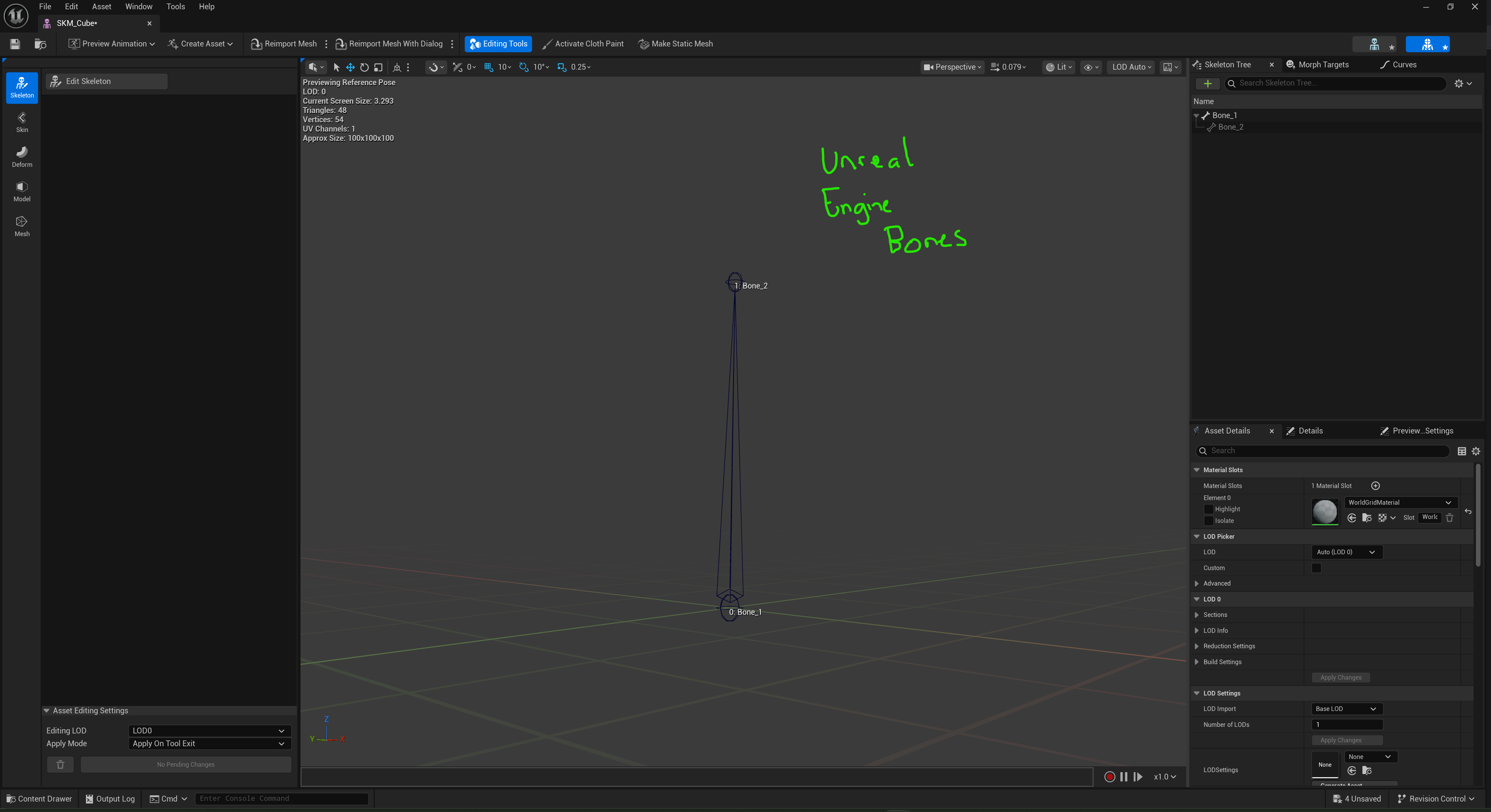
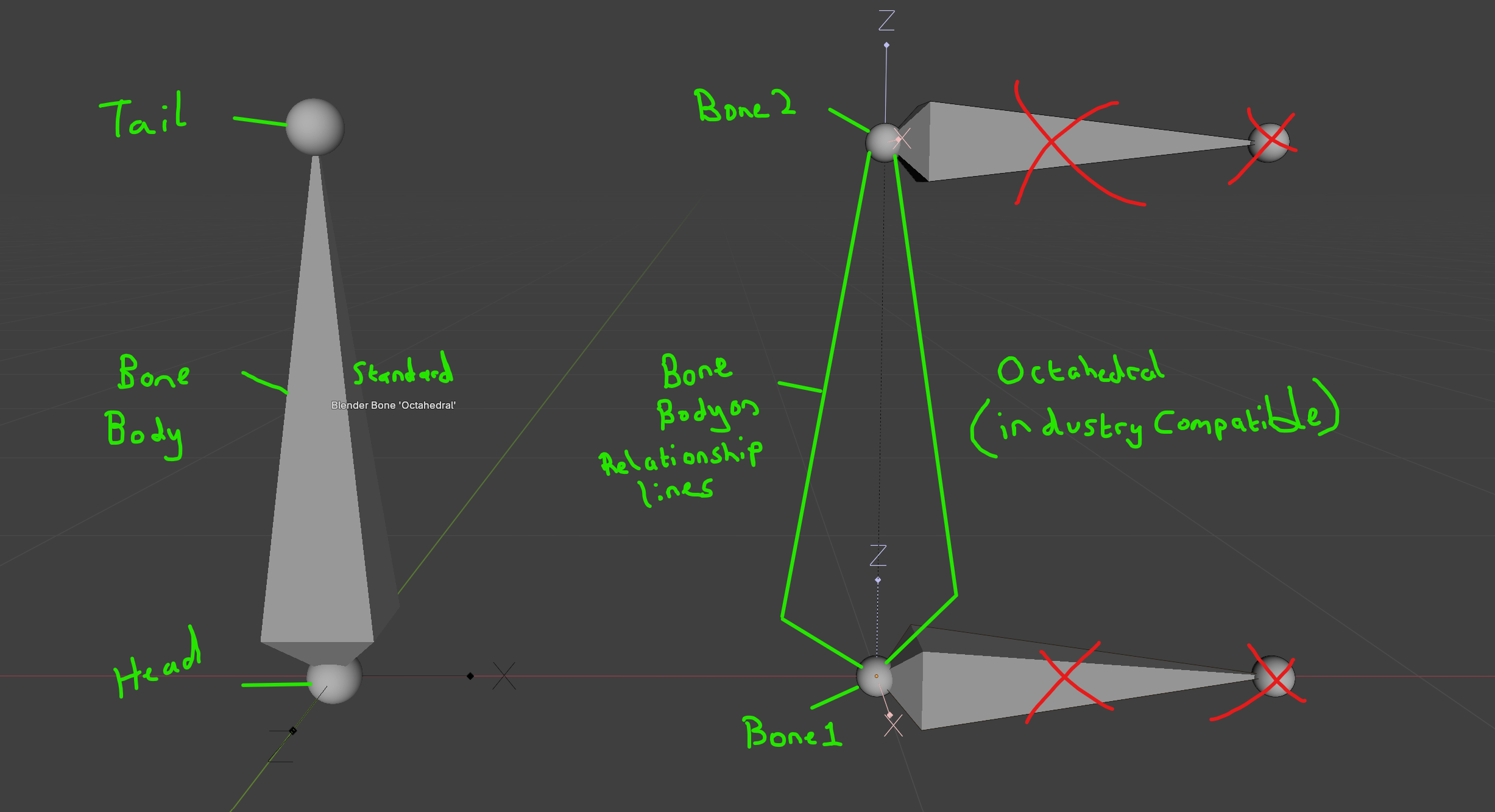
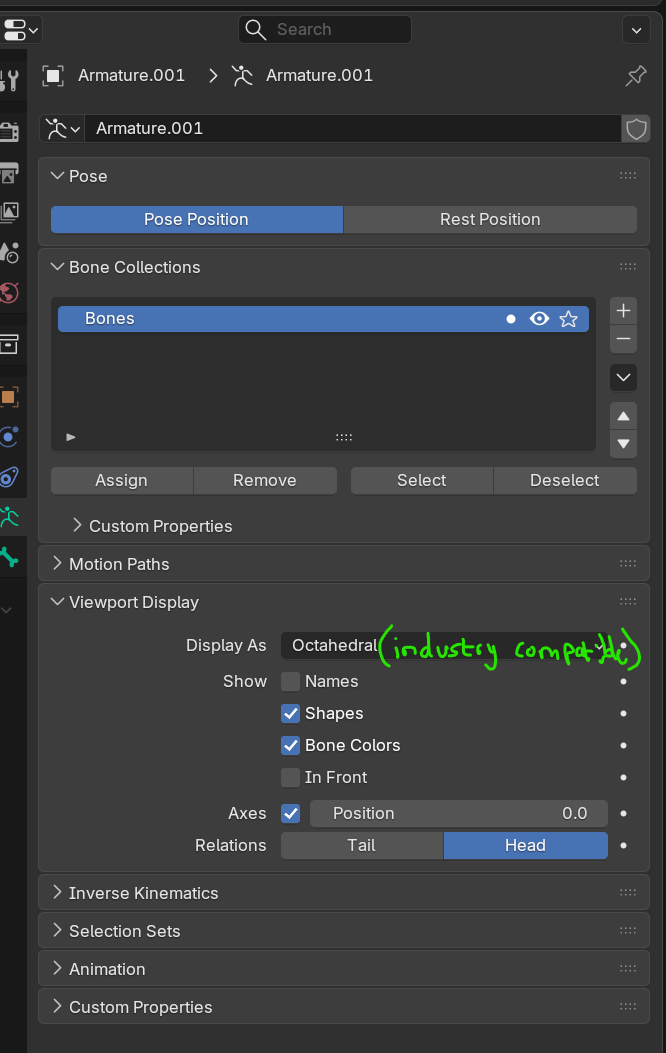
The Solution: I propose adding a new display mode under the Armature > Viewport Display > Display As menu specifically dedicated to external pipeline use, called Octahedral (Industry Compatible).
Instead of altering the underlying data structure, this mode would change how the armature is drawn in the viewport:
-
The Bone Head: Displayed as an octahedral shape (acting as the actual transform point/joint).
-
The Relationship Lines: The parent/child connections (including "Keep Offset" dotted lines) are rendered visually as the bone body connecting the octahedral heads.
-
The Bone Tail: Minimized or hidden entirely, as it is irrelevant for point-based game engine hierarchies.
This strictly serves as a Viewport Display mode and does not interfere with how Blender's math or parenting works under the hood.
The Benefits:
-
Game Engine Parity: Developers can visually rig in Blender using a structure that perfectly mirrors how the skeleton will look and behave in engines like Unreal, Unity, or Godot.
-
Reduced Confusion: It eliminates the guesswork regarding bone tails and helps prevent the generation of unwanted leaf bones upon export.
-
Non-Destructive and Familiar: It maintains Blender's iconic octahedral aesthetic while offering a win-win workflow. Native Blender riggers can keep using the standard display, while game developers get an industry-compatible view without jumping through hoops. Everybody is happy.
0 Comments