
Proposal: Add Curvenet to Blender
Blender lacks a tool like Maya's Curvenet for advanced curve-based deformation. Adding such a tool would enable more complex and realistic animations in Blender.
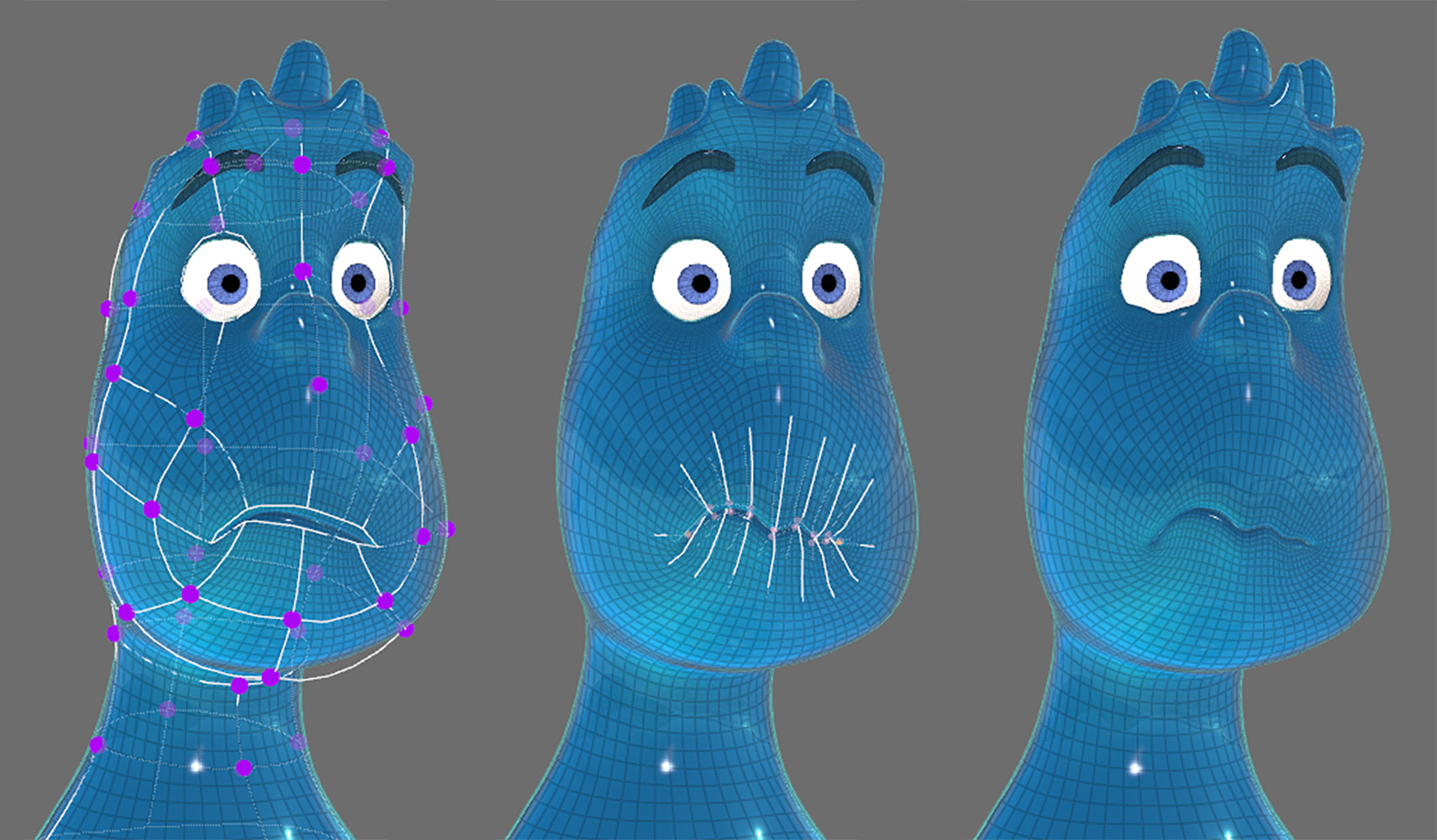
What is Curvenet?
Curvenet creates a network of curves on a model, and manipulating them creates dynamic secondary deformations.
Benefits
- More precise control over deformations.
- More realistic animations.
- Increased productivity.
Key Features
- Create and edit curve networks.
- Adjustable controllers.
- Dynamic and animatable deformations.
- Integration with Blender's rigging system.
Adding Curvenet would enhance Blender's animation capabilities.
10 Comments
have you tried mesh deform modifier ?
Actually, yes, I used it and I know that the Surface Deform modifier does the same thing I said above... but I don't think it's very suitable for animation and rigging.
I belive that would be great......!
However, is that even feasible, for Blender devs nowadays? Frankly, I have no idea; this kind of feature seems 'top-secret' and highly 'classified' from giant company; a locked box, like Windows OS --in opposition to Linux OS for instance.
Maybe I'm wrong and it is actually feasible...?
Anways, I would propose something different; I hope you don't mind I suggest it right here, but I could make this into a new proposition as well: The exploration, from Blender devs, of new, alterantive, experimental Skinning methods/algorithms for more natural and convenient Organic Rigging, often developed/researched in the academic field.
Like, I imagine that, for example, the basal LBS (Linear Blend Skinning) method/algorithm, which Blender uses and also most CG software use by industry convention, if that could be tinkered in some ways, then splitted into 'branches', that would work inside Blender as alternative Options, just as current DQS (Dual Quaternion Skinning) method/algorithm [it's the Preserve Volume Option, in the Armature Modifier], that would be quite interesting.
This draft idea goes a bit beyond; for example... if a team could 'translate' certain aspects of the Corrective logic behind certain more or less reliable Armature Deform techniques (e.g., Helper Bones which Riggers implement), analythically into the maths of a Skinning algorithm, that might be sufficient to produce a branch of the LBS method, an experimental branch that, well, would just work inside Blender, but that could be an improvement over the conventional LBS method (same might be said about DQS and SS [Spline Skinning] methods btw).
I know for example the historical case of 2004, of the very analytic Corrective Armature Deform method using Helper Bones, which are the "Fan"/Fanny Bones approach; it was published in 3D World magazine on that year (21 past from today!!!), it was done by an Australian professor named Shaun Freeman, about the "Fan Bones", it employed the old CG software named Animation:Master.
It's a very analytic method, because the purpose of the Fan Bones is to JUST "De-Rotate" (in an Opposed Direction, but on a Gradual Smoothing) a portion of Mesh that is located closer to a Joint, which, because of the Artifacts caused by the Skinning method itself (!!!), causes INTENSIVE Rotational Deforms precisely to those Vertices near what would be the 'Pivotal Point of Rotation' of the Mesh, often (but not necessarily) matching with the Deform Bone's Head/Root Ball Joint (which is the Pivot Point of a Bone in Blender). The Mesh that is Deformed by that Deform Bone, when the Deform Bone Rotates, suffers brutal, unrealistic Rotations... unnecessarily excessive in my vision; Riggers can fix this with Helper Bones to some extend, by simply "De-Rotating" gradually JUST that portion of the Deforming Mesh close to the Joint, with Helper Bones, like the Fan/Fanny Bones. But, what it means, mathematically, is that we just wanted that Skinning method didn't do THAT severely stronger Rotation (on that critical Deforming Mesh Region) to start with. This is why I believe improving/'fixing' the Skinning method/algorithm for more convenient Organic Rigging, might not be as difficult as it may sound. ChatGPT alerted me about some of the restraints of those experimental Skinning methods/algorithms... one major issue is Performance. Then, one like myself might just wonder... why we've got several gigantic upgrades in both hardware & software fields of Technology (including of Performance!!) every single year world-wide... but, 'no.', no way when it comes to Rigging: as no one is good enough to even think to tinker a revolutionary, or just better solution that remains economic (or might just take a little longer to calculate, but still perfectly feasible). Ok, it might not become convention (thus not good strategy for money), however, in the context of Blender Rigging & Animation potential, I believe this is not such a terrible idea.
I apologize for the long text, and if I've gone a bit off-topic. But I believe this can still foster interesting conversation and reflection in the Community, somehow. Btw, I've Voted: Yes, even though I have no idea if that is well above Blender 'pay grade' or not. 😹
Hello... Thank you very much for the complete explanation you gave... The truth is that I (although I have never written a long comment in my life 😅) read the explanations you gave and even did some research on topics that were new to me and your suggestion is really remarkable and valuable...
Alternative methods to Skinning I think it could be possible for Blender but right now I don't think it's possible (I don't know)
The truth is that I myself have no idea what the status of Blender developers is at the moment but I know that they are currently working on improving Blender and I know that any idea that is proposed here... if the idea is approved, it will be written down for an indefinite future
Thanks for the feedback, bro. Well, there is already a many-years-consuming big project for Blender, composed of multiple steps or subjects which are a must to be address, and which is called "The Future of Rigging and Animation". In that project, are included the propositions of revamping older stuff, such as the NLA Editor and Shape Keys. Already, in 2025, with Blender 4.4, we can immediately access promising progress in the Animation domain, with the Slotted Actions (this is part of the NLA Editor revamp/gradual substitution aspect of the project; Slotted Action is like... a 'small-big' thing, it's just the beginning of the good work they're doing). Since the whole project takes so long, I believe it is bound to change and adapt over time anyways, so that additional ideas should be positive.
what's the difference to bendy bones?
That's a great question! While both Bendy Bones and Curvenet are tools for deforming models, they have key differences:
In short, Bendy Bones deforms bones, while Curvenet deforms the model directly using curves. Curvenet offers more precise control and flexibility for complex deformation effects.
same idea,blender studio has a similar project: studio.blender.org/projects/wing-it/3b851ab19246d4/ Cooperate with the Auto face map widgets plugin: projects.blender.org/blender/blender-addons-contrib/src/tag/v3.1.1/object_facemap_auto Then one can roughly imitate Pixar's rigging system
Why does this feel like a conversation with a chat bot?
The truth is, I have no problem reading and listening to English. I'm just not very good at English sentences, and I use Google Gemini to translate my ideas and make the text more colloquial (I'm using Google Translate now).