How powerful branched path tracing is. (Simple Render Comaprison)
j
johnpdelacruz28
16 May 2020
8 Comments
l
lsscpp
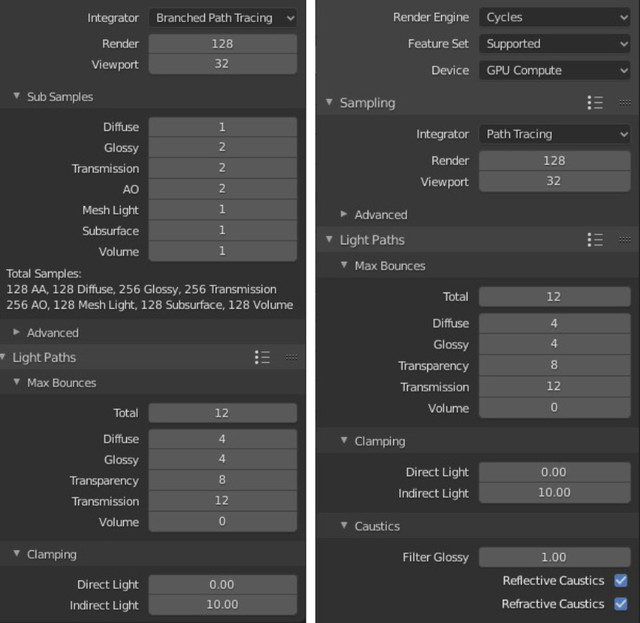
I render a lot with BPT (interiors mainly), and the main benefit I found using it is that it catches a lot more specular light even at low clamping values. The render times has to be greater for sure: you're firing at least 3 times the samples in your example
j
johnpdelacruz28Author
*
@ Lsscpp
* You are right. I forgot to compare the render times but is to be expected to take longer.
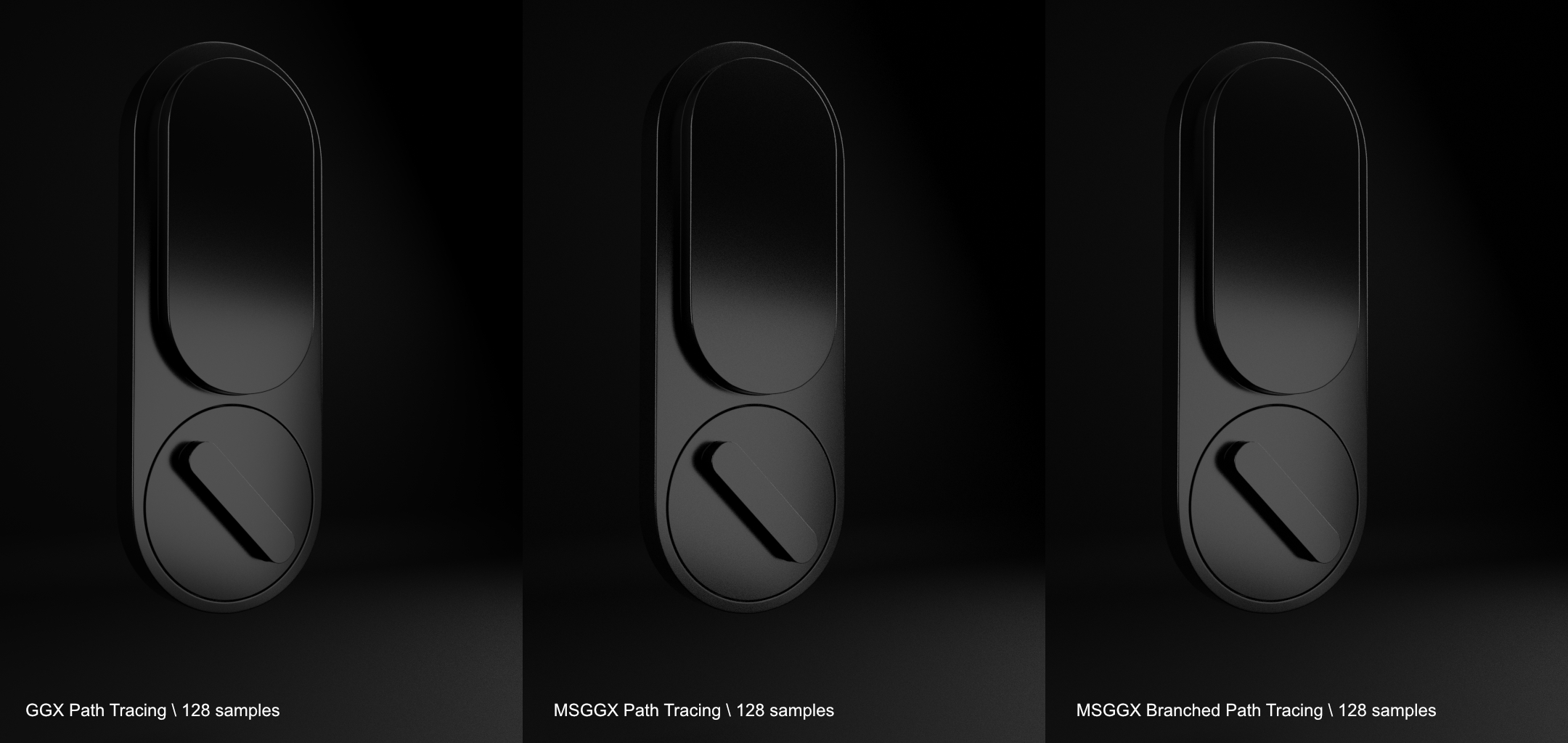
The discrepancy in accuracy between the main object and the details affects the sense of realism.
In my personal opinion, it is more recommended to have the secondary details to look more accurate than the primary object detail. When I say primary it is the object base while the secondary details are the edges, shadows, gradients, and ambient lightings. The render will look more realistic because the primary detail is being supported by the secondary details. Path tracing has its uses too on specific situations.
l
lsscpp
*
@johnpdelacruz28
* Sorry but i totally disagree about what you're saying about the technically/estetichal aspects of Blender rendering system. BPT and regular pathtracing converge to the SAME result, there's no secret
more realism
or
depth
ingredient in either one or the other. Give it enough samples and pathtracing will bring you the "secondary details". What BPT brings instead is more control to wisely use sampling (test render passes and increase samples according to the noisier ones) along with "sample all lights" which is the responsible for those enhanced specular on edges. It doesn't work everywhere tough. I experienced that in complex scene with many different materials, BPT slows down a lot, while PT becomes the way to go to get reasonable rendertimes.
1
j
johnpdelacruz28Author
*
@ Lsscpp
* You have a point and I respect your opinion. Maybe it is just me but I do use path racing also.
1
l
lsscpp
Rendertimes? Looking at the settings, look like you'er using much more samples in BPT, so it's an unfair comparison
j
johnpdelacruz28Author
*
@ Lsscpp
* That is also one of the upside in using branched path tracing. Additionally you have more control on the details. In my own opinion, pushing the samples one way could create a quality render that lacks details, hene creating a flat composition(less depth).
I believe this is difficult to create in post processing. Knowing the fact that this could also introduce more detaill loss and intensify noise and distortion.
j
johnpdelacruz28Author
*
@ Lsscpp
* I forgot to post the render times, I believe it was just the same 4:26 mins.
j
johnpdelacruz28Author
The difference is on the small details. The smooth gradients and more accurately defined edges that adds some realistic depth for the object and negative spaces.


8 Comments
I render a lot with BPT (interiors mainly), and the main benefit I found using it is that it catches a lot more specular light even at low clamping values. The render times has to be greater for sure: you're firing at least 3 times the samples in your example
* @ Lsscpp * You are right. I forgot to compare the render times but is to be expected to take longer.
The discrepancy in accuracy between the main object and the details affects the sense of realism.
In my personal opinion, it is more recommended to have the secondary details to look more accurate than the primary object detail. When I say primary it is the object base while the secondary details are the edges, shadows, gradients, and ambient lightings. The render will look more realistic because the primary detail is being supported by the secondary details. Path tracing has its uses too on specific situations.
* @johnpdelacruz28 * Sorry but i totally disagree about what you're saying about the technically/estetichal aspects of Blender rendering system. BPT and regular pathtracing converge to the SAME result, there's no secret more realism or depth ingredient in either one or the other. Give it enough samples and pathtracing will bring you the "secondary details". What BPT brings instead is more control to wisely use sampling (test render passes and increase samples according to the noisier ones) along with "sample all lights" which is the responsible for those enhanced specular on edges. It doesn't work everywhere tough. I experienced that in complex scene with many different materials, BPT slows down a lot, while PT becomes the way to go to get reasonable rendertimes.
* @ Lsscpp * You have a point and I respect your opinion. Maybe it is just me but I do use path racing also.
Rendertimes? Looking at the settings, look like you'er using much more samples in BPT, so it's an unfair comparison
* @ Lsscpp * That is also one of the upside in using branched path tracing. Additionally you have more control on the details. In my own opinion, pushing the samples one way could create a quality render that lacks details, hene creating a flat composition(less depth).
I believe this is difficult to create in post processing. Knowing the fact that this could also introduce more detaill loss and intensify noise and distortion.
* @ Lsscpp * I forgot to post the render times, I believe it was just the same 4:26 mins.
The difference is on the small details. The smooth gradients and more accurately defined edges that adds some realistic depth for the object and negative spaces.