
Artistic control for Depth of Field
With some artistic changes recently I thought I'd give this one a shot. It would be very useful to have a near and far control for the Focus distance. Here's an image to clarify what I mean.
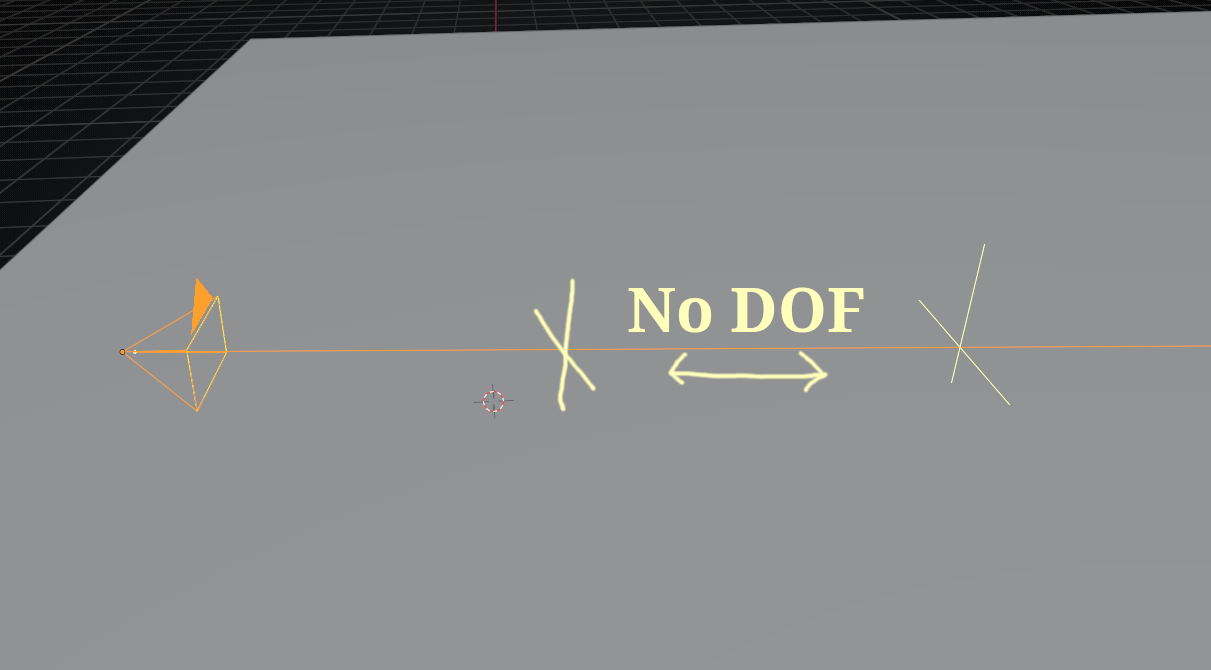 It would also be useful to have separate control of the strength for the near and far DOF and maybe even a curve, which as far as I know is linear. In other words the compositor depth of field but actually good.
I was also gonna mention bokeh but I noticed someone else sugested that 4 years ago.
Btw if I got an upvote for every time I saw someone ask how to do this in Blender in the past, this post would be at the top of right click select.
6 Comments
This could be done with adding "tilt shift" settings to the camera. Currently you can only shift the camera, but you cannot tilt, which would allow you to play more with the area that is in focus and simulate some really expensive lenses. I wrote a proposal about that some time ago blender.community/c/rightclickselect/x6zE/
would definitely love to see some more options for DOF because yeah, if I want to just blur the background without affecting the foreground I have to:
And its a bit of a mess like that in my opinion.
I like the idea of adding something like focus stacking. Being able to define a range which will be in focus, not just a single spot. Especially for macro shots or product visualization, this would be extremely valuable!
This is much more possible with fake post-process DOF. In that case the size of the blur can be a pretty arbitrary function.
At that point I rather forget about doing it. The fake options either suck or take a lot of time and manual labor to do well.
This requires the ray from the camera to follow a bent path. The No DOF region the ray would be following the centerline of the camera. Before and after it it would spread into a cone of random directions based on the aperture size.